Scimify by Veraproof
Automate User Provisioning Across All Your SaaS Apps
Scimify adds SCIM support to SaaS apps that don't natively or fully support SCIM, eliminating manual user provisioning and dramatically improving security compliance.
Transform your IT operations from reactive to proactive and save on stale license costs with automated user and group lifecycle management.
Deploy in Minutes
Set up automated provisioning across all your SaaS apps in minutes, not weeks
Enhanced Security
Eliminate manual provisioning errors and ensure consistent access controls
Move Faster
Employees get instant access to tools they need, accelerating productivity
See Scimify in Action
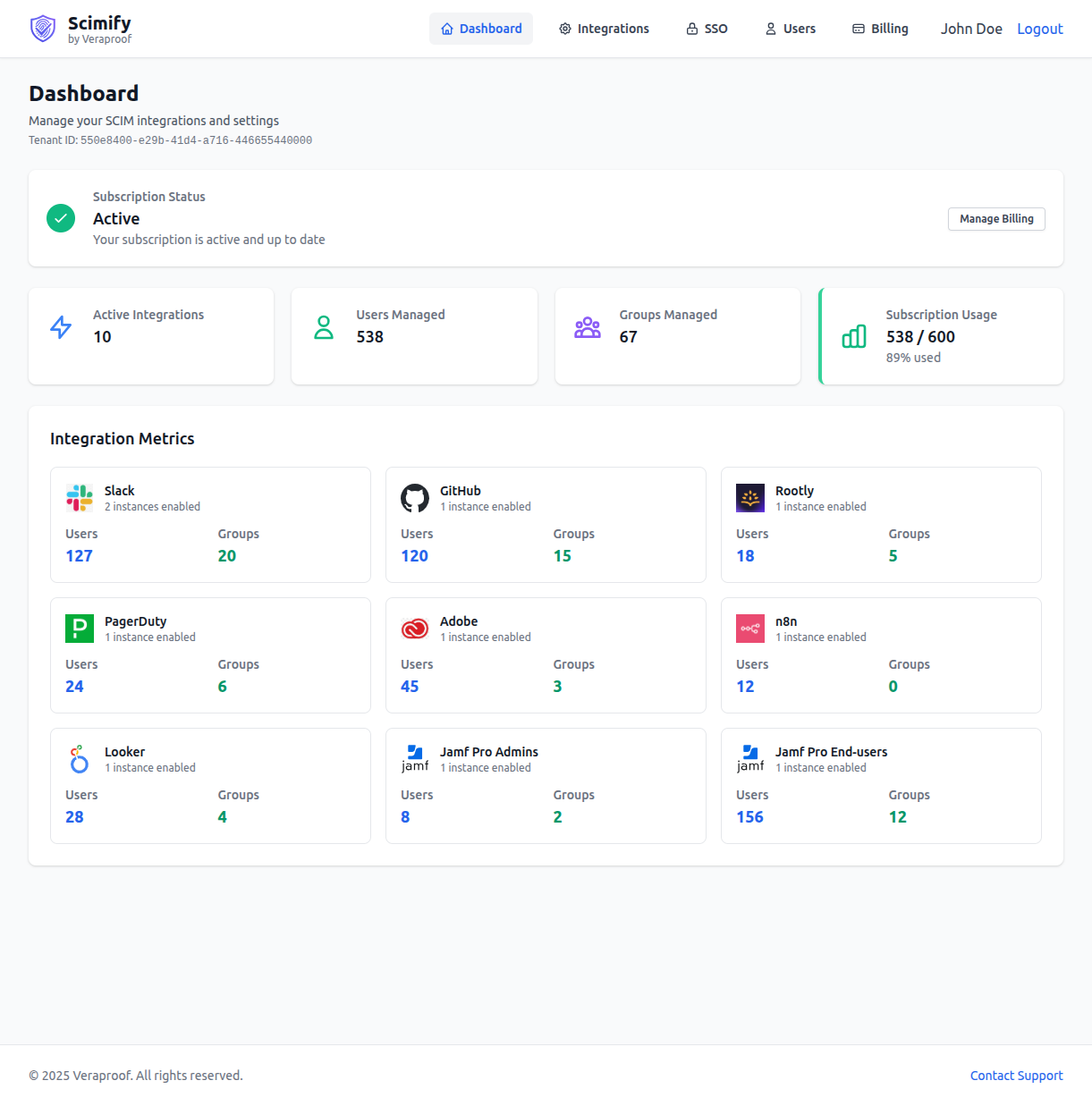
Dashboard
Integrations
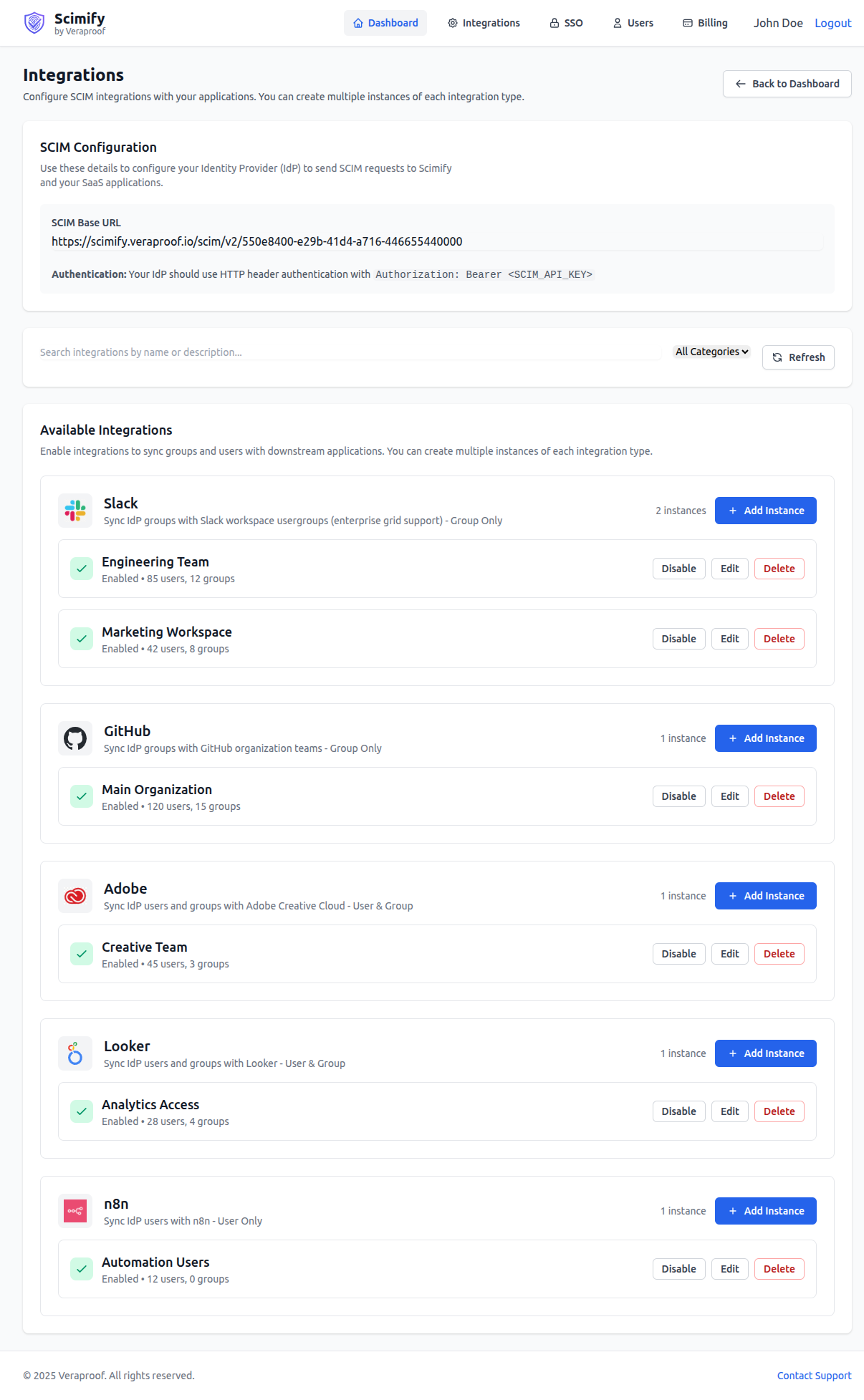
Featured integrations
Prebuilt SCIM connectors for the apps teams ask for most.
- n8n Push users to n8n via SCIM

- Apple App Store Connect Push users to App Store Connect via SCIM (invite-based, with roles and access flags)
- Jamf Pro End-users Push users and user groups to Jamf Pro via SCIM

- Adobe Creative Cloud Enterprise Push users & groups to Adobe Creative Cloud Enterprise via SCIM

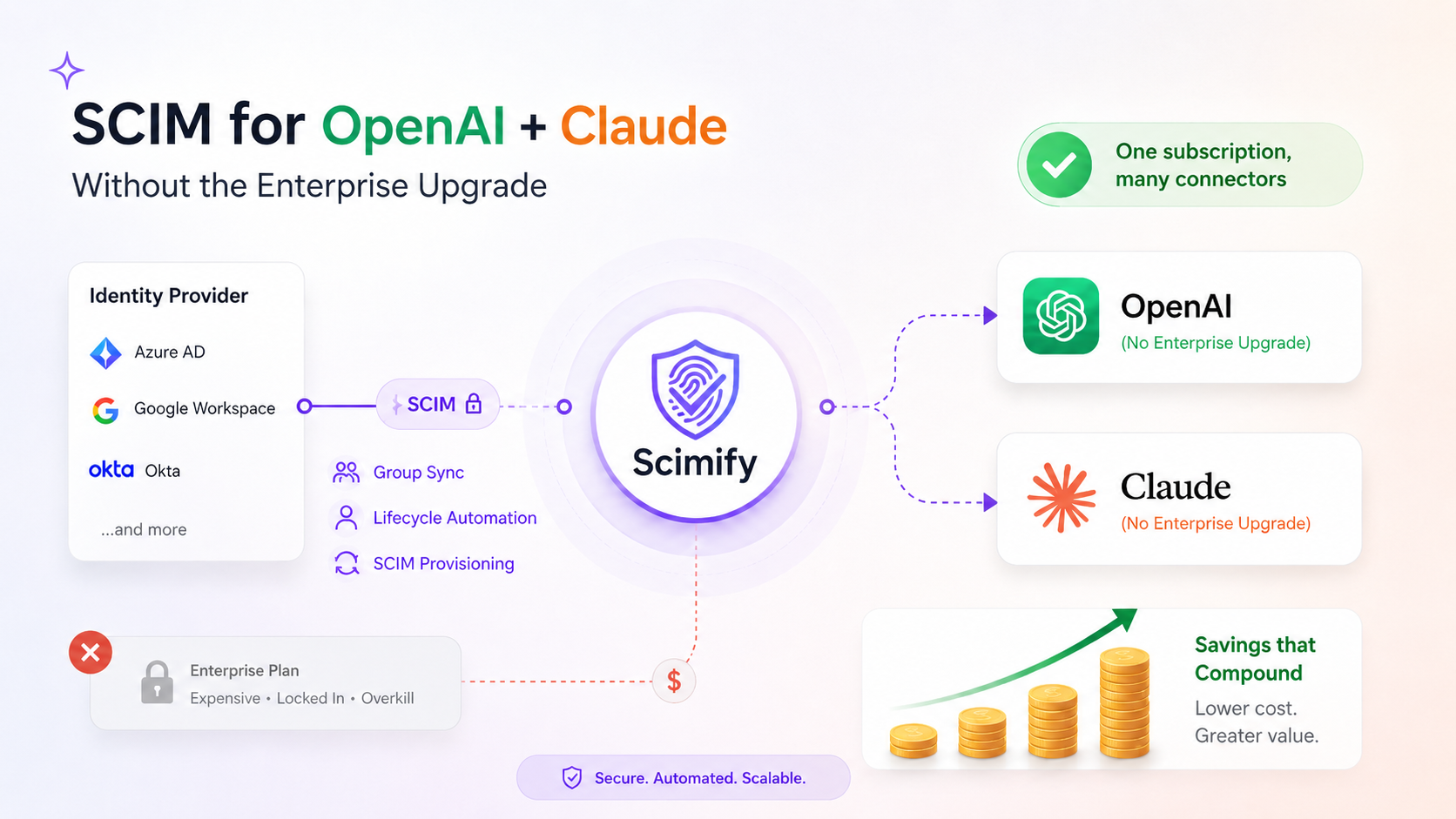
- OpenAI Push users and groups to OpenAI organizations via SCIM (invite-based, with optional role management)

Pricing
Monthly
- Per-user pricing
- Unlimited integrations
- SSO authentication
- Email support
Yearly
- Per-user pricing
- Unlimited integrations
- SSO authentication
- Email support
Need enterprise billing, multi-year subscriptions and slack support? Contact Sales
Scimify Blog
Latest insights on SCIM provisioning, automation, and identity management.
Frequently Asked Questions
1. How does Scimify work?
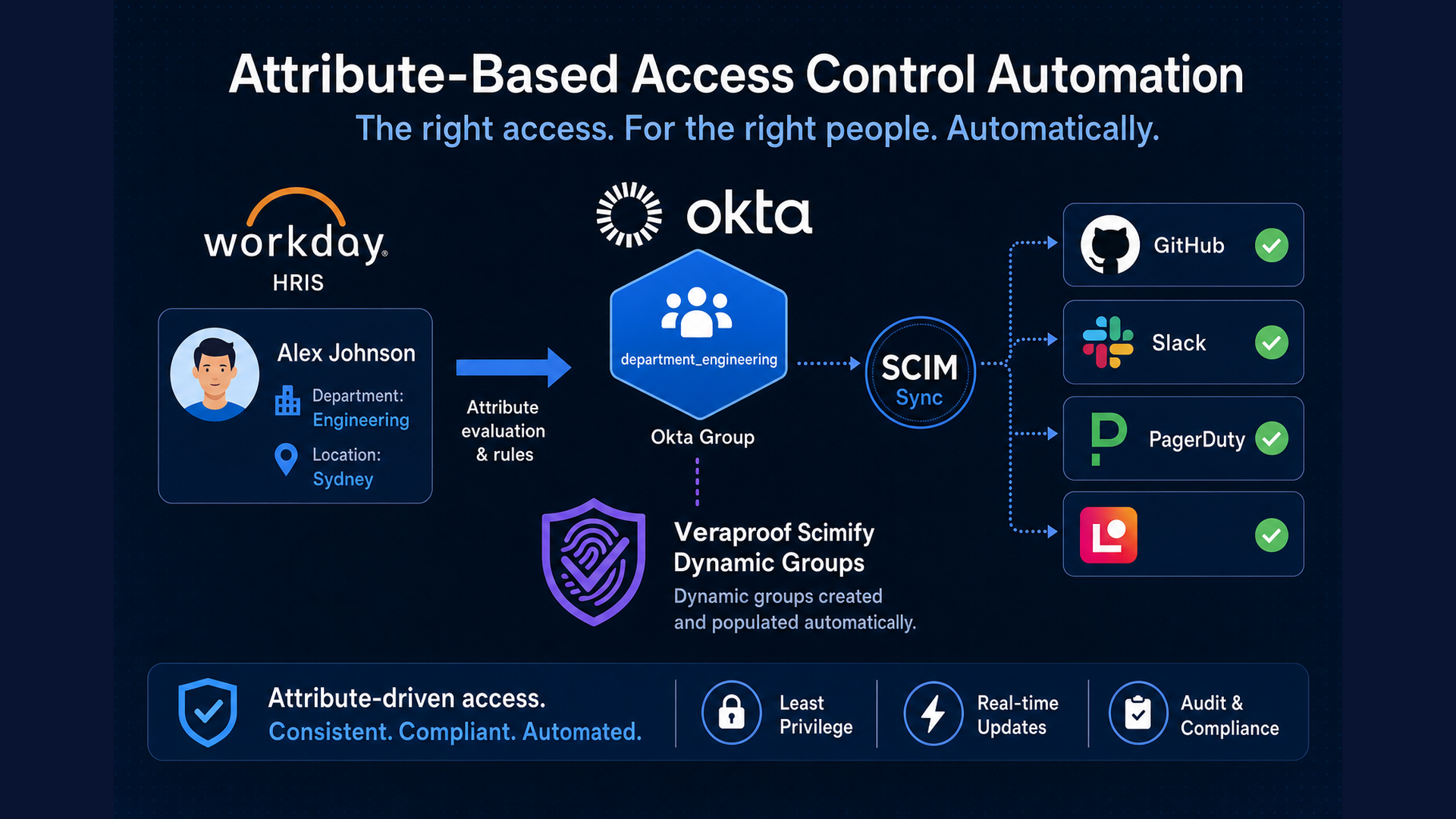
Set up SCIM provisioning in your IdP or identity governance platform just as you would for any other app.
Scimify's pre-built connectors translate SCIM requests into each app's native API calls, enabling seamless user and group provisioning — even for apps without native SCIM support.
See our configuration guides for Okta, Lumos, and other SCIM 2.0 platforms (Entra ID, SailPoint, and more).
2. What SaaS apps do you support?
Scimify supports prebuilt SCIM connectors for popular SaaS apps — including Slack Enterprise, GitHub, Adobe Creative Cloud, Jamf Pro, OpenAI, Buildkite, SendGrid, ClickSend, and many more — plus Custom HTTP mapping for niche or in-house APIs.
See the full catalog on our Scimify integrations page.
More apps are added regularly — contact us if you don't see yours.
3. Why do I need Scimify?
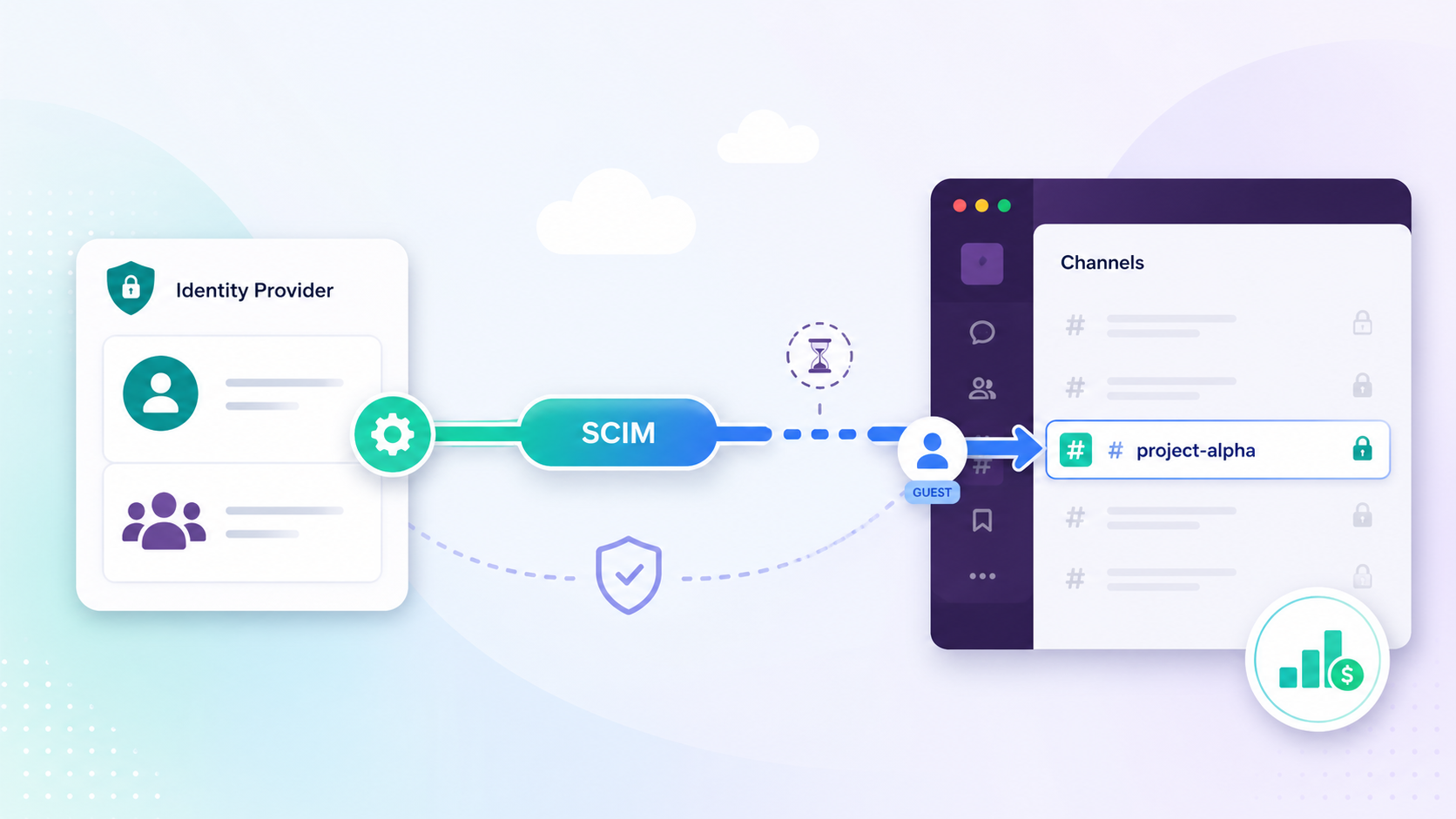
Scimify automates user & group provisioning across all your SaaS applications, eliminating manual setup and reducing security risks. Instead of managing users individually in each app, you control everything from your central identity provider using SCIM - even for applications that don't natively support SCIM.
Key benefits:
- Automated joiner, mover, and leaver event handling
- Reduced SaaS license costs through automated deprovisioning
- Saves time and reduces manual overhead for IT teams
- Instant access when requests are approved in your identity governance system
- SCIM support for apps that don't natively support enterprise provisioning
4. How are users counted?
Only provisioned users count toward your subscription quota.
If a user is provisioned to multiple apps or groups through Scimify, they're deduplicated - meaning each unique user is only counted once.
5. What happens when I delete an integration?
When you remove an integration, all configuration data, user mappings, and group associations stored in Scimify are deleted.
However, users and groups in the downstream app remain untouched, ensuring continuity in your target systems.
6. What data does Scimify store?
Scimify only stores the minimum required data to perform SCIM operations, including:
- User email addresses and display names
- Group names and unique identifiers
- Integration API tokens (encrypted at rest and in transit)
We never store passwords, and all data is processed under least-privilege access principles.
7. Does Scimify support Okta imports?
Yes.
Scimify can import users and groups from apps into Okta, allowing you to link existing app resources with your Okta directory - perfect for onboarding legacy users or aligning external accounts.
8. Do you support custom apps?
Absolutely.
For many in-house or niche SaaS products, you can use Custom HTTP yourself: define how each SCIM operation (create, update, delete, group membership, and so on) maps to your app’s REST endpoints—method, URL, headers, body templates, auth (for example API keys or OAuth client credentials), and how to read IDs and fields back from JSON, XML, or query-style responses. Your IdP still speaks standard SCIM to Scimify; Scimify turns that into the HTTP your API expects.
When you need a fully managed, productized connector (deeper semantics, edge cases, or we maintain it for you), we can also build custom integrations at no additional cost for paying customers. If you have an active subscription and want either path, contact us and we’ll help you choose the best fit.
9. Can groups be renamed from the IdP?
Yes.
Scimify supports renaming groups in the IdP, allowing you to keep your group names consistent across all applications. Idp configuration will determine if a group rename in the Idp will be reflected in the downstream app. Okta supports group renaming by default, so Scimify will automatically reflect any group name changes in the downstream app.
Scimify Documentation
Access integration guides, and configuration instructions for Scimify.